Ask the right question
Work out what you actually need to know before reaching for a number.
Calculators and AI can already do the sums. What they can't do is work out what to ask, or notice when an answer makes no sense. That's the part Hearthkin Woods is built to exercise, for kids in grade 6 and up who are growing up with AI.
This page is about why the game is built the way it is. We're not claiming results here. This is our reasoning, so you can judge it yourself.
Most learning games are two things stapled together. There's a game — jumping, decorating, racing — and there's a worksheet, and the worksheet interrupts the game. Answer six questions, get sixty seconds of play. Answer six more, get sixty more.
Players are not fooled by this for a second. They work out very quickly that the questions are the price of admission, and they optimise accordingly: guess fast, click through, get back to the fun. Some will even learn to game the question format itself rather than the material.
So the rule we set ourselves was simple, and slightly annoying to work within: no part of this game is allowed to stop and quiz anybody. If the math couldn't live inside something a player already wanted to do, it didn't go in.
Someone playing Hearthkin Woods wants something before any arithmetic shows up. They want more seeds, because the field looks empty. They want the treat their pet likes. They want the thing on the shelf at the shop.
The arithmetic is how you get it. Counting out the right coins is buying the seeds, so the game never stops being a game.
Which is also why paying at a shop never earns a "great job!". There's no confetti and no points for getting the sum right. The reward is that the thing you were trying to do works: you walk away holding the seeds. Quests still end with a reward card and some experience, like any adventure game, and a few pay a little more for a tidier answer. But we'd rather the satisfaction come from their own goal than from us applauding.
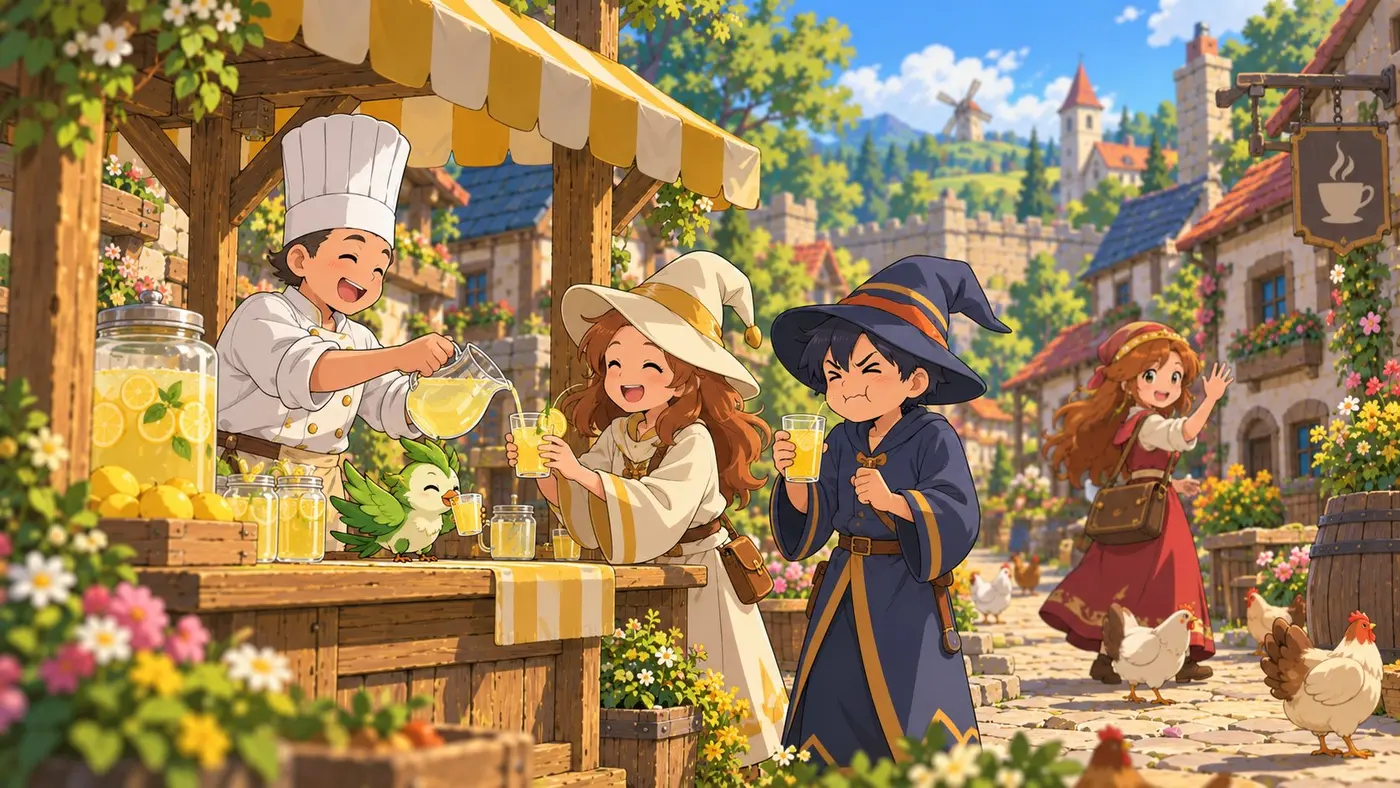
The money in the game is strictly base ten, and we built it that way on purpose. Ten bronze coins are worth one silver. Ten silver are worth one gold. The columns of a written number and the coins in your pocket are the same structure.
So a price tag reading 556 is not a number you tap past. It's five gold, five silver and six bronze. If all you're carrying is six gold, you have to see that one of them stands for ten silver, and that you'll be getting change.
That's carrying and borrowing, done with real coins for a real reason. The measuring and counting quests work on the same principle: the number has to describe something real before it's worth calculating.
Hand over six gold instead, with nothing smaller to spare, and the shopkeeper gives you 4 silver and 4 bronze back. Nobody explains this anywhere in the game. You work it out because you want the thing.
The answer is cheap now. Anyone with a phone can get a sum worked out in a second. The skill that's getting more valuable, not less, is knowing which sum to ask for, and whether the answer you got back is any good.
So in most quests the game does the adding up, the way a calculator or an AI would. The player earns their reward by deciding what needs working out: which numbers matter, whether to round up, whether a deal is fair, whether a result looks right. Get the question right and the answer follows.
Counting coins is the one place a player does every step by hand, because there the place value is the point.
Every one of those questions comes from a person who is stuck. A baker needs pies cut into the slices a customer ordered. A lamplighter has just enough oil for six lanterns, each three-quarters full, and not a drop more. Someone at the lake swears every fish he catches is a big one, and the numbers decide whether he's right.
Nobody in the game says "fraction", "average" or "median". People talk the way people talk: a normal fish, a fair slice, enough to go round. The math is how you find out what's true, not a lesson someone is giving you.
Work out what you actually need to know before reaching for a number.
Pull a lever, see what moves. Every system in the game can be poked to find out what it does.
Spot when a result can't be right. A wrong guess costs a moment and tells you something.
That's abstract thinking: seeing the shape of a problem, not just the numbers in it. We think it's the part of math the next generation will need most, because it's the part no machine can do for them.
Nobody gets fluent at anything by doing it once. Flashcards repeat a skill too, but there the repetition is plainly the whole point, and everyone can tell. The daily rhythm of a farm repeats the same handful of skills on its own.
Count the rows still dry, keep track of which ones you've done. Same small counting job, every single morning.
Crops come in over days, so you're always working out how many you have and how many you'll have.
Every purchase is a fresh round of composing coins and checking change. The prices change; the method doesn't.
Food costs money and portions matter, so keeping an animal fed is a small budgeting habit on a daily loop.
None of that is presented as practice. It's just what you do on a farm — but someone who plays for a fortnight has counted out change dozens of times without once being asked to.
Underpay the shopkeeper and they tell you you're a little short. No buzzer, no red cross, no shaking animation, no score going down. They just wait, holding the thing, while you have another go at the coins.
The shop has no timer and no score. A wrong count isn't recorded and shown back to you later. A mistake is simply a turn that didn't work yet, and you take another one.
We're not going to tell you what that does or doesn't do to a person — we don't know, and anyone selling you a number about it is guessing too. What we can tell you is the belief that shaped the decision.
Our view is that most of what gets called "being bad at math" is really being afraid of getting it wrong where someone can see. So we removed the things that make being wrong feel expensive, and left the arithmetic.
A lot of the modern free-to-play toolkit exists to make a game hard to put down. We've left all of it out, because those mechanics aim at a part of a person we don't want to aim at.
No loot boxes, no crates, no prize wheel, no "you were so close to the rare one". Creatures sometimes drop extra items, as in any adventure game, but nothing is built around chasing a rare pull, and nothing random is ever for sale.
There's no counter that resets if you miss a day, and no reward for showing up simply because it's a new day. Missing a week costs nothing but the week.
No limited-time events, no seasonal thing that vanishes, no shop stock that's gone tomorrow. There is nothing to be anxious about missing, because nothing goes away.
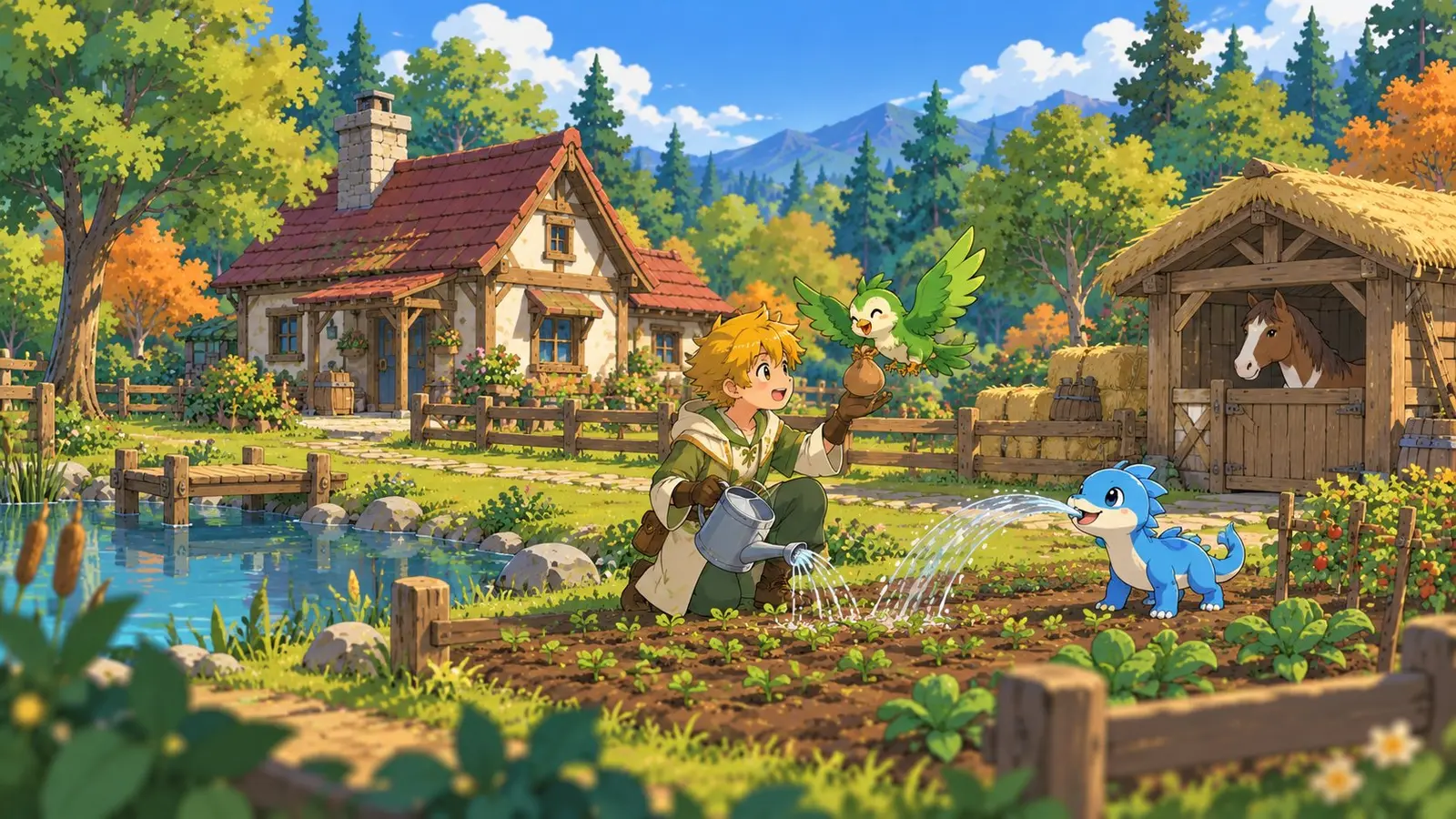
The farm waits while they're gone. Nothing withers and nothing is stolen; the farm's day only moves on when they sleep in the game. The world holds their place instead of punishing them for leaving it.
The practical upshot is that Hearthkin Woods is meant to be finishable for the evening. There's a natural stopping point most sessions — the field is watered, the shopping is done — and when you hit it, nothing is nagging you to stay.
Every player picks a first creature at Rancher Bramble's ranch: Aurula, Nixus or Mokobi. It fights beside them, levels up with them and grows into new forms along the way. It also gets hungry and thirsty, and it won't head out with you if it's worn down.
Neglect is deliberately gentle and entirely reversible. Nothing dies, nothing is lost, and there's no guilt-trip notification chasing them about it. A neglected pet is a slightly sad pet that perks up the moment it's looked after.
But the care is real work, with real arithmetic in it. Food costs money, so keeping an animal fed means keeping an eye on what you can afford. If it gets hurt, the nurse charges a fee you have to be able to cover. Looking after something turns out to be a budgeting problem, which is exactly what it is in life.
That's the only obligation in the game, and it's the one we think is worth having. Being needed by something is a better reason to come back than a login streak.
The three starters, in the game's own pixel art
The learning is the part parents ask about. The game around it is built for anyone who likes a good game.
Eight classes with three paths each, parties, a dungeon, duels and bosses. Outthink, not outgrind: you get past a problem by working it out, not by repeating a fight.
Parties let a parent and a kid play side by side, so it's something you do with them, not something you hand them.
A farm to tend, nothing that withers while you're away, no streaks. Play for twenty minutes and stop.
Every math quest keeps your time and your best. Race yourself, or chase the fastest times on the leaderboards.
Voiced townsfolk, short films between chapters, and a mystery about where your old mentor went.
Titles are earned in the story and worn next to your name. Keeper is the first.
It's easy to start, and the problems climb from simple counting to grade 6 and 7 math: unit prices, negative numbers, the median, percent.
Sit in for a quest and you see exactly how your kid thinks a problem through. Ask them how they picked a buyer, or how they knew the fisherman was fibbing, and the explaining is where it sticks.
If you want the practical side instead — safety, what's collected, what it costs — the parents page covers it. Or just open the game and have a look around.


