An answer to "when will I use this?"
The problem comes first, from someone in the valley who needs it solved. The math turns up as the way to fix it, so students meet the reason before the method.
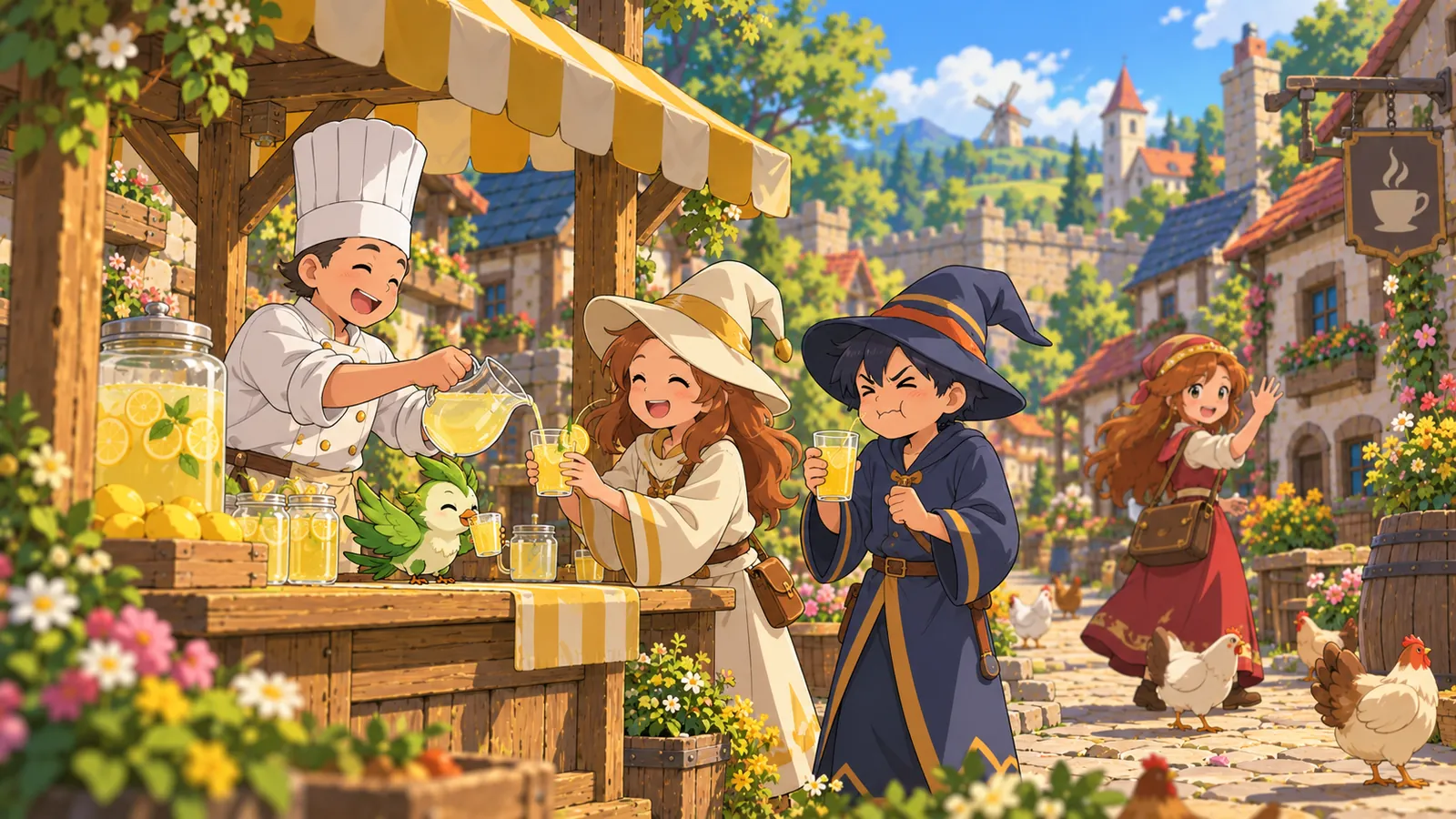
Hearthkin Woods is an online adventure game for grade 6 and up. Every math quest is a real problem a character in the valley needs solved, and every one is matched to the Common Core standards it uses.
It answers the question every middle school math class hears: "when will I ever use this?" A student who just worked out the best price per basket at a farmer's auction has used a unit rate, because they wanted the coins.
It runs in a web browser, with nothing to install. Try it yourself any time, free, with no account. It's still being tested, and we're looking for teachers to try it with a class. Here's how.
Most students can follow a worked example. The hard part is meeting a problem cold, seeing which math it needs and setting it up. That's the part every quest asks for.
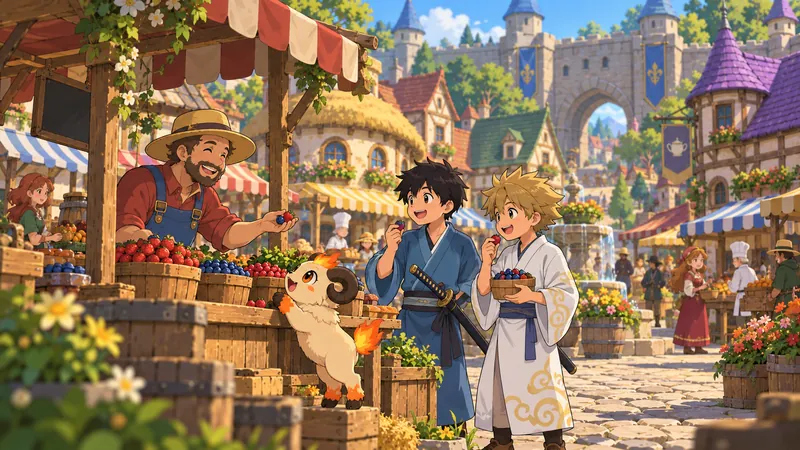
The problem comes first, from someone in the valley who needs it solved. The math turns up as the way to fix it, so students meet the reason before the method.
A unit rate shows up as an auction bid, the median as a fisherman's boast. Students have to recognise the idea in a new setting, the same thing a word problem on a test asks of them.
In most quests the game does the long sums. The student decides what needs working out and sets it up, which is the step a calculator can't do for them.
A wrong answer means the job isn't done yet, not a red mark. Students try again straight away, a habit worth bringing back to class.
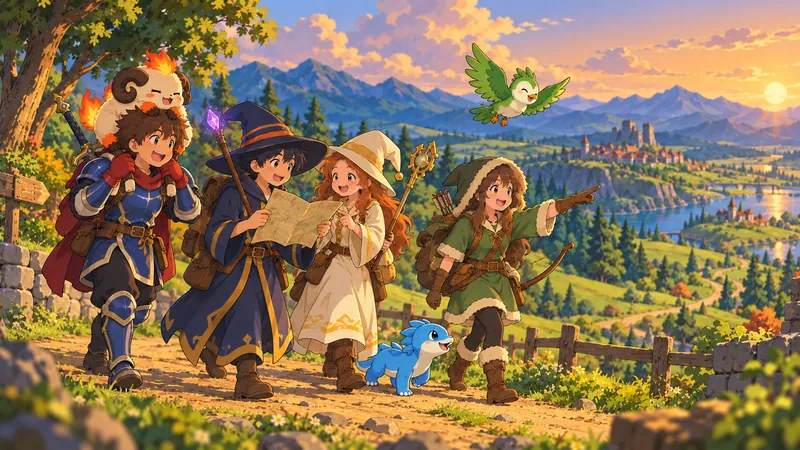
Forty-three quests use math. The early ones lay foundations (counting, measuring, fractions, multiplying); these are some of the grade 6 and 7 ones.
Farmer Joe's buyers bid "4 baskets for 36 poro". Students find each bidder's price per basket and sell to the best one.
Tom has lost his prices. Students set old bills side by side, find two that differ by one item, and work out what each thing costs.
A fisherman swears every catch is a big one. Students hang the fish smallest to biggest and find the middle one to see what a normal fish weighs.
Nurse Joy's animals have lost, kept or gained weight. Students pen each one by its change, then add up the changes, some below zero.
A 10% tax lands on top of a pie order, and Tom's share has to rise to cover it.
Thatch's hay lofts come in odd sizes. Students work out how many bales fill each one, including the half bales an odd length leaves over.
Risha rings up a day of orders as money in or money out, then students say whether the shop came out ahead.
A postman's directions read "up to Street 3, third house on the right". Students follow them through a grid town of a hundred houses.
The math quests are the start. The valley is being built to run on real rules, so later quests move into the money skills your students will need after school: earning a wage, budgeting, saving, borrowing and paying back, and running a small business. It's the same ratios, percents and negative numbers, used for bigger decisions.
Those arrive a layer at a time. Today's game has the jobs, the coins, the shops and the market stall; the rest is what we're building next, and we'll only say it's in the game once it is.
Students who do well in the game are also practising what shows up on every report card: following multi-step directions, reading the whole problem before starting, sticking with something hard, and working with others in a party for the toughest fights. We describe these as what the game asks for, not as results we've measured.
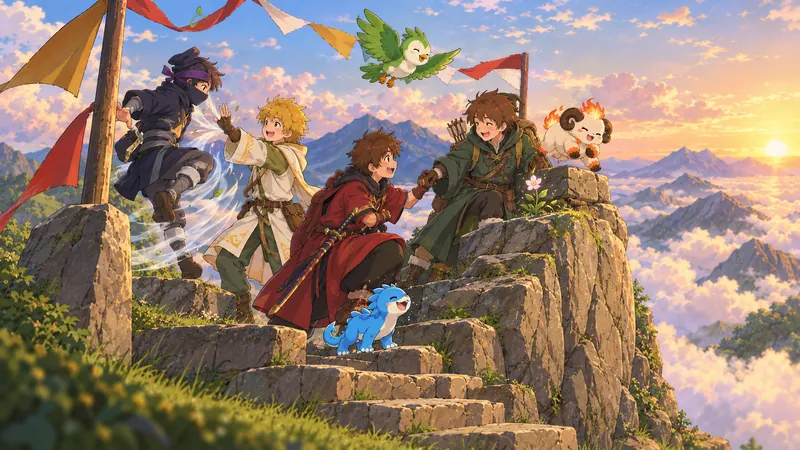
It's a full adventure game, not a 10-minute drill, so it works best where students have some time to play.
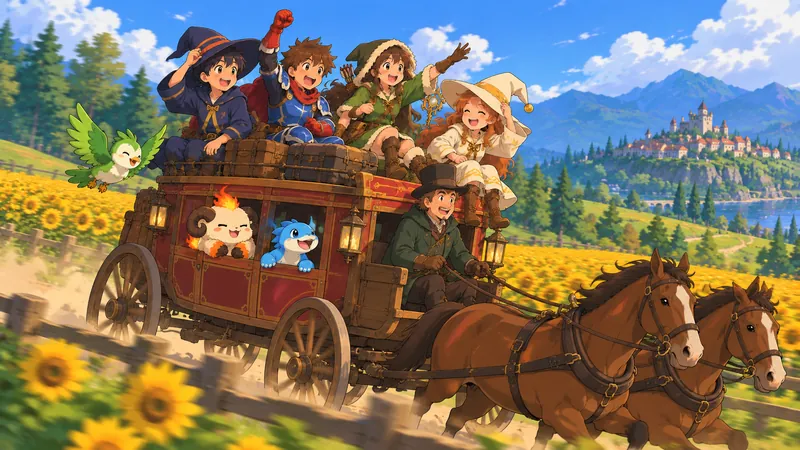
Pick the quests that match the unit, and let the class see the same idea used for something real.
Something worth doing for students who finish first, that still uses the math you're teaching.
Students keep the same hero at home, so they pick up exactly where they left off in class.
Math clubs, game clubs and after-school programs can play together in parties of two to five.
The full detail is on the for parents page and the privacy page.
Yes, a first version. You start a class and get one code to share. Students join with it and make a username, with no email address and no real name. Your class page then shows each student's heroes and, for every math quest, whether they finished it, their best time and how many answers the game refused. It keeps no scores and no record of every attempt, and there is no school sign-in yet. Make a teacher account and we'll switch classes on for you.
Not yet. Today quests open in story order, so students at different points will be on different quests. Assigning quests to a class is part of the teacher tools we're building.
Nothing while it's in testing. We haven't set a price for schools yet, and when we do, it will never come from ads or from selling anything to students.
A laptop or desktop with a keyboard and mouse, and a modern web browser. We haven't tested school Chromebooks yet; if your class uses them, tell us and we'll check with you.
Some of it, and the game says so the first time it opens. Most of the game's art was made by real artists; we used AI for some props, icons, sounds and voices, and the plan is for all of it to come from real artists.
We're looking for grade 6 to 8 math teachers to give it 20 minutes with one class and tell us honestly what happened. Make a teacher account and we'll switch classes on for you, or play it yourself first. Tell us your unit and we'll point you to the quests that fit it.